Three New Ways to Save Money on a Kindle Fire Tablet
April 15th, 2013

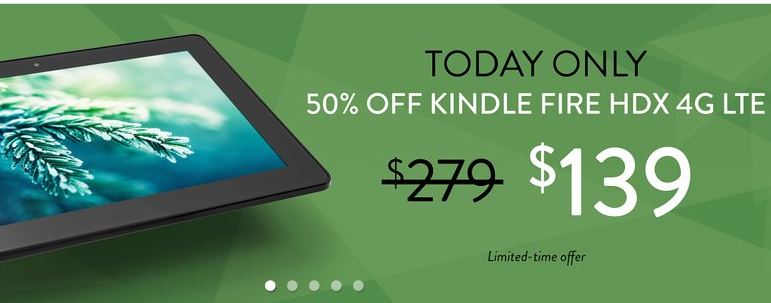
If you’re shopping for a new Kindle Fire tablet, I’ve just discovered some great new ways to save money. For example, if you’re just shopping for a basic Kindle Fire tablet, you can buy one now from Amazon for just $134. It’s a refurbished Kindle Fire, a previously-owned device that Amazon promises has been “refurbished, tested, and certified to look and work like new.” That’s a savings of $25 — and Amazon’s also offering similar discounts on some of their other Kindle Fire tablets!
This means that you can also save $30 on the high-definition versions of Amazon’s 7-inchKindle Fire tablets. A refurbished model now costs just $169 — a nice discount from its usual price of $199. These tablets come with 16-gigabytes of storage space, but Amazon’s also offering the same discount on the tablets with more storage. For $199, you can buy the 32-gigabyte version of a refurbished Kindle Fire HD tablet — though the new ones would normally cost you $229!
That may actually feel like a $50 savings to some people, because up until this month, Amazon was charging $249 for the 32-gigabyte version of their Kindle Fire HD tablets. But sometime in April, they quietly discounted its price to just $229. Now they’ve discounted that another $30 if you’ll purchase a refurbished version. And if you opt for the 16-gigabyte drive instead, you’ll save $80 over what the 32-gigabyte version would’ve cost you in March!
I was hoping Amazon would also discount some of their black-and-white, e-ink Kindles. But when I checked this morning, they were still on sale at their regular price. In a way, that makes these refurbished tablets seem that much more special. The only thing better than a multimedia Kindle is one that Amazon sold you at a big discount!
“Every Certified Refurbished Kindle is backed by a full one-year limited warranty,” Amazon explains, “just like a brand-new Kindle.” (Before shipping them to customers, Amazon performs a full diagnostic test, install the latest software, give the devices a thorough cleaning, and even re-package them in a new box.) It even comes with a free month of Amazon Prime, so you can watch thousands of movies and TV shows in Amazon’s Instant Video library without having to pay for them individually. Amazon Prime also qualifies you for a discount on faster shipping of any products you purchase from Amazon — but it also earns you some fun Kindle freebies, like the ability to access new books for free in the “Kindle Owner’s Lending Library”!
And as a last selling point, Amazon’s even created a new web page where they compare their Kindle Fire tablets to Applet’s iPad mini. The page’s slogan…
“Don’t you love getting more for less?”
Are Tablets Killing the Kindle?
March 27th, 2013

People have been worrying about this for more than a year — ever since Amazon came out with their color, touchscreen Kindle Fire tablets. Amazon’s insisted that they remain commited to their black-and-white Kindles too, but CNN is reporting that other manufacturers of digital readers might not be so lucky. “As tablets boom, e-readers feel the blast,” reads the headline in CNN’s “Games and Gadgets” section. The popularity of tablet devices may be hurting sales of black-and-white “readers”.
They point to the dramatic collapse recently in sales of the Nook. (Barnes and Noble apparently reported that for the last three months of 2012, their Nook division actually earned 26% less than it had the previous year.) At first I’d thought the Nook was just losing its customers to Amazon’s own Kindle readers. But CNN cites some technology analysts who have a different theory.
“It’s not that the Nook failed,” argues one analyst from Forrester Research. “It’s that the world of tablets exploded…” The Kindle Fire and iPad-style tablets have proven more popular than anyone expected, and they’re now becoming a regular part of our lives and the way we use computers — “not just a handy device to consume a bit of media.” It’s strange to remember that the very first iPad was released less than three years ago. But CNN gives Amazon credit for proving that other companies could also successfully sell their own tablets, inspiring even more companies to enter the market.
Google entered the tablet market soon after with the Nexus 7, and CNN believes that the Kindle Fire “likely nudged Apple” into building a smaller iPad Mini. The end result is that there’s a tablet for every budget. But that may also make people less interested in buying a black-and-white reader that’s dedicated mostly just for ebooks, the article concludes — adding “this trend has been particularly unkind to the Nook.”
But could the Kindle suffer the same fate, losing its audience to the fancier color touchscreen tablets? CNN posed the question to another well-respected technology research firm called Gartner, who acknowledged that “It’s a rough market.” But he seemed to think it was rougher for companies which aren’t named Amazon. The iPad dominates the market for high-end tablets, and in the rest of the market, Amazon’s Kindle “brand” has already established itself. If I’m reading this right, he’s saying that the lower demand for black-and-white readers actually helps Amazon, because it makes it harder for new competitors to establish themselves against Amazon.
Of course, not everyone wants a multi-functional device that does more than display ebooks. (My girlfriend refuses to install any games on her Kindle, because she’s worried that she’ll then start endlessly playing those games — instead of reading on her Kindle, which is what she really loves doing!) But on the other hand, sometimes it’s hard for me to even remember what the world was like before the Kindle came along.
Just imagine how much the world could change again over the next five years — especially if people decide to start reading more their ebooks on tablet computers!
Amazon Denies Rumors of a $99 Kindle Fire HD
March 21st, 2013

Wow! Wouldn’t it be awesome if you got a color, touchscreen Kindle Fire tablet — with an HD screen — for just $99? And one well-respected technology blog reported just that possibility on Wednesday. “We’re now hearing that a $99 Kindle Fire 7″ tablet is in production, and will be shipping this year,” wrote Sarah Perez at the technology blog TechCrunch.
But just hours later, a business news blog was reporting that Amazon had already issued an official denial of that report. “It’s not happening,” BusinessInsider quotes Amazon as saying. “We are already at the lowest price points possible for that hardware.” Of course, BusinessInsider had already run their own story about the possibility of a $99 high-definition Kindle Fire Tablet — citing as their source that first blog post which appeared on TechCrunch. It now appears below Amazon’s official denial, and BusinessInsider is probably glad they’d added a few skeptical sentences (noting, for example, that TechCrunch had called the story a “rumor” that she was “hearing”.)
It’s a really fun idea, though, so I enjoyed reading the rest of the analysis from BusinessInsider. (“It’s a stunning price point, but it’s not totally crazy from Amazon…”) They note that TechCrunch reported Amazon may have gotten a discount on the chips for their tablets, and adds that “it’s not hard to envision Amazon selling a Kindle Fire tablet at or just below its manufacturing cost.” BusinessInsider‘s best estimates are that Amazon spends $174 to build the 7-inch version of their tablets, but their reporter also notes that Amazon’s CEO “says he wants to make money when people use a Kindle, not when they buy one.
“This makes Amazon completely different than Apple, which makes money on hardware, and picks up some additional revenue from apps and content…”
It’s almost obligatory for articles like this to ask who wins and who loses. Microsoft and Google would both be threatened by a $99 tablet, BusinessInsider concludes, because neither company has significant traction yet in the market for selling tablets. Apple wouldn’t be threatened now, but “In the long run, like in five years, it will be a problem for Apple because the price of an Amazon tablet isn’t going up. The software and hardware aren’t going to get worse, they’re only getting better.” And what’s fascinating is that all of that is absolutely true, even if Amazon isn’t releasing a $99 version of their high-definition Kindle Fire tablets.
Inevitably, reporters have to play these elaborate games of “What if…?”, because it’s all part of sorting out whether the rumor really is plausible. But it’s also a fun exercise on its own, reminding us that we do indeed living in interesting times, where you really never know what’s coming next. Wow! Wouldn’t it be awesome if you got a color, touchscreen Kindle Fire tablet — with an HD screen — for just $99?
Yes, it would….
Amazon Discounts Their High-Definition Kindle Fire Tablets!
March 14th, 2013

Amazon’s just lowered the price on their large-screen Kindle Fire HD tablets! Now the 8.9-inch tablets are just $269 (for the Wi-Fi only version), and $399 for the version with built-in connectivity to Amazon’s 4G wireless network. Len Edgerly, who does the Kindle Chronicles podcast, described it as “big developments for Amazon’s biggest Kindle Fire HD model”. And Amazon’s also announced that these large-screen tablets will now also be available in England, France, Germany, Spain, Italy, and Japan.
tinyurl.com/269Tablets
Amazon calls the 8.9-inch tablets “our highest resolution, largest high-definition display”, and in a press release Wednesday they bragged that it’s “perfect for web, apps, movies, games and magazines.” My girlfriend complains that the 7-inch version of the Kindle Fire tablet is too small for enjoying a big-budget Hollywood movie, but these larger tablets also have dual stereo speakers with Dolby audio, which according to Amazon will deliver a “crisp, rich sound”. There’s even a front-facing camera for taking high-definition photos and making video phone calls. And there’s an extra significance in the way Amazon is now releasing these high-def tablets to the rest of the world.
Less than two months ago, a research firm noted that the Kindle Fire “practicaly doesn’t exist” outside the United States. Localytics had determined that 89% of all of Amazon’s tablets where in America, with most of the rest were in the United Kingdom, “After those two, no other country has even one percent of worldwide Kindle Fires,” their report concluded. But where Amazon had made their tablet available, it had been a big success — for example, in America, where Amazon’s Kindle Fire made up one-third of the entire market for Android tablets.
Based on that, the researchers concluded that if Amazon comes up with a good plan for distributing their tablets globally, Amazon “could quickly dominate the Android tablet market worldwide!“
Has the Kindle Killed the Nook?
February 26th, 2013

I knew the Kindle was successful — but I never dreamed it was literally destroying its competition. But last week, Barnes and Noble told its investors that not only did their Nook division lose money for the second year in a row. They also reported that its loss this year was going to be even bigger than their losses were last year — and a company insider suggested they’ll put a smaller emphasis in 2013 on trying to sell Nook devices.
The disappointing figures covered both Nook sales and whatever revenues they were earning from selling ebooks for the Nook. And Barnes and Noble is now lowering their predictions for how much they’ll be able to earn throughout all of 2013. On Monday, the New York Times reported that’s the worst news for the company’s investors. “The problem was not so much the extent of the losses, but what the losses might signal: that the digital approach that Barnes & Nobles has been heavily investing in as its future for the last several years has essentially run its course.”
But the most interesting detail in the Times’ article is that it’s not just investors who are losing hope for the Nook, but also the executives at Barnes and Noble. Citing a person “familiar” with the company’s inside strategy, they suggest that in 2013 Barnes and Noble may try to emphasize its vast library of digital ebooks in deals with other tablet manufacturers (like Samsung and Microsoft). “They are not completely getting out of the hardware business,” the source said, “but they are going to lean a lot more on the comprehensive digital catalog of content.”
One technology blogger even wrote that the Nook was in a “death spiral,” noting that Barnes and Noble had already issued an earlier warning in January about disappointing Nook sales over Christmas and during the last three months of 2012. “Companies very rarely warn twice in 40 days about the same problem,” writes a blogger at BGR.com, adding “When it happens, it usually indicates that something so unexpected is taking place that executives just cannot wrap their minds around it.” Amazon’s got a better distribution plan for their Kindle tablets outside of North America, but Barnes and Noble seems to be having problems even selling ebooks to their current Nook customers. For these reasons, he writes, “It is hard to see how the Nook’s revenue decline is going to be reversed in 2013.
“And it’s very hard to see why any new consumer who researches his or her purchase for even five minutes would now take the betamax risk of buying a Nook.
Surprise Discount on the Kindle Fire HD!
December 10th, 2012

“Today only,” Amazon’s just announced on a special web page, “save $50 on Kindle Fire HD 8.9-inch”. That means you can pick up the 16-gigabyte model for just $249 (WiFi-only) — and even the 4G + WiFi version, with 32 gigabytes of storage, now costs just $449.
Remember, these are the “high-end” models with an 8.9 inch screen. (The original models — which are still available — only offer a 7-inch screen.) Amazon warns that this deal is limited to just one Kindle Fire HD per customer — and while the sale ends Monday, it’s also only available “While supplies last.” It’s the kind of sale that makes you wonder if Amazon is considering an upgrade to their line of high-definition Kindle Fire tablets. Are they trying to clear out their inventory before replacing them with an upgrade model?
But I think there’s an even simpler explanation: Amazon wants to attract shoppers who are looking for a nice Christmas gift. They plastered this discount on the front page of Amazon.com, describing it as their “Deal of the Day.” Historically Amazon has always showned a big spike in their sales during the month of December. Maybe this year they want as many people as possible to buy a Kindle Fire HD.
There’s a couple of reasons why Amazon wants you to buy a Kindle Fire HD. The biggest one is it makes it easier to buy more things from Amazon! Even if they sell the tablets at a discount, they’ll still earn more money from those customers when they start downloading movies and music to the devices from Amazon’s store. Plus, Amazon’s probably even more interested in “mind share.” Once all those purchases are tied to your account, it makes it harder to switch to a tablet from another vendor — like Apple — because you’d lose access to all of the media that you’ve already purchased from Amazon!
I’m sure Amazon’s given it a lot of thought, but in the end, that’s their problem to deal with — and we as consumers are the ones who are going to benefit. Because if you were looking to purchase a Kindle Fire HD, you can now do it for $50 less!
Can the Kindle Catch the iPad?
November 6th, 2012

There’s an old saying that journalists love a horse race. Current events are more interesting when there’s one side that’s winning and one side that’s losing. That’s why blogs like to focus on the “war” between the iPad and Amazon’s own Kindle Fire tablets. Unfortunately, neither company releases their sales figures, but periodically you’ll get some good estimates from the “market analysts” at professional research firms.
And that’s what happened on Monday, when some surprising new numbers were released by the technology analysts at IDC. It’s a research firm that focuses specifically on consumer technology, and they’d made two interesting observations. In just three months — July, August, and September — they’re estimating that 27.8 million tablet computers were sold. And that means that nearly three tablets were sold this year for every two tablets that were sold in the same period in 2011.
Even if you just compare tablet sales to the previous three months, total tablet sales have now still increased by 6.7%. But what’s even more interesting is that Apple’s share of the tablet market is getting smaller, IDC notes. According to their calculations, more customers are now choosing instead to buy devices with the “Android” operating system — like Amazon’s Kindle Fire!
Of the 27.8 million tablets sold between July and September, 14 million of them were from Apple (all the various versions of the iPad). That barely gives Apple half of the new sales for tablet computers, with a share of 50.4% (versus 65.6% in the previous three months). The next-biggest vendor was Samsung, who sold 18.4% of the tablet computers bought between July and September. But Amazon’s share of the market during that same period was 9% — which was nearly double what it had been in the previous three months!
That may not sound like much, but Amazon waited until September, the last month in the quarter, before announcing their newest tablets. “Here’s why Amazon’s tablet share is going dramatically higher,” writes a blogger at ZDNet, noting that Amazon’s newest version of their Kindle Fire tablet can compete with the iPad on both price and features. He also notes that during September, Amazon was only selling their Kindle Fire HD tablets within the United States. But as Amazon expands their sales to the rest of the globe, their share of the market should increase.
Of course, there’s also another story behind Apple’s figures, according to the analysis by IDC. “We believe a sizeable percentage of consumers interested in buying an Apple tablet sat out the third quarter, in anticipation of an announcement about the new iPad mini. Now that the new Mini, and a fourth-generation full-sized iPad, are both shipping we expect Apple to have a very good quarter.” But they note that the iPad Mini is still relatively expensive at $329, which opens up a market opportunity for Amazon and their Kindle Fire tablets.
Now with the Christmas shopping season approaching, IDC reports that Apple’s missteps “leave plenty of room” for companies like Amazon to “build upon the success they achieved in the third quarter!”
Amazon Mocks Apple
October 29th, 2012

Ouch! I know Amazon wants to beat Apple in “the war of the tablets”. But today Amazon launched a surprisingly aggressive attack against Apple’s newest tablet computer, the iPad Mini. They fired the first shot last Thursday during a conference call announcing their earnings. But today they continued their attack using the front page of Amazon.com!
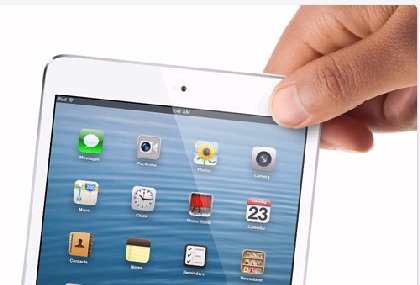
Apple had announced their new “iPad Mini” just six days ago, priced at $329. It competes directly with Amazon’s Kindle Fire tablets, though its color touchscreen has a lower density of pixels (offering just 163 pixels for every inch of screenspace). Even the original Kindle Fire — now priced at $159 — has 169 pixels per inch. And Amazon’s new Kindle HD (priced at $199) now offers 216 pixels per inch.
Apple’s always had a reputation for producing good-but-expensive products. So apparently, Amazon wanted to make sure that everyone noticed that Amazon’s cheaper devices were actually offering more pixels per inch. Somewhere in Seattle, someone came up with a publicity stunt that was sure to get the attention of technology bloggers everywhere. The first thing you see today at the top of Amazon.com is a quote from the technology site Gizmodo.
“…your [Apple's] 7.9 inch tablet has far fewer pixels than the competing 7-inch tablets! You’re cramming a worse screen in there, charging more, and accusing others of compromise? Ballsy.”
Amazon seems anxious to position themselves as the better-and-cheaper option, especially with the Christmas shopping season coming up. (Ironically, Gizmodo.com went offline this afternoon, possibly overwhelmed by all the additional traffic they were now getting from Amazon.com!) Just two days after Apple had launched their newest product last week, a spokesperson for Amazon had also contacted the AllThingsD blog, and bragged that the sales for the Kindle Fire HD had actually increased the day after Apple had announced the iPad Mini. In fact, Amazon sold more Kindle Fire HDs on that day than on any other day since they’d launched the product. Not only that, but Amazon had actually sold three times as many as they’d sold just the week before!
It’s possible that there was a pent-up demand for tablets on that one day. I’m guessing that a lot of shoppers had postponed their purchase just to see what kind of device Apple was going to announce. But apparently a lot of them then decided to go with Amazon’s device, because it was much cheaper and offered a higher density of pixels. And now Amazon’s making sure everyone’s hearing about the difference.
I wanted to ask a hardcore Apple fan what they thought of Amazon’s argument, so I contacted my friend Steve. (He’s been an Apple enthusiast for years, and once wrote a blog post where he jokingly described himself as a freedom-hating Apple fanboy.) “It’s a fair hit…” Steve conceded. “I get that it’s an improvement over the original iPad, in that it’s the same resolution but smaller so the pixel density is higher. But the pixel density is still lower than anything else they sell — or, other than the orignal iPad, anything else that they’ve ever sold!”
My friend Steve also pointed out that the iPad Mini is also going to have to compete with the Kindle, at least in some ways, “and Kindle has this nice, paperlink e-ink surface. As a backlit device, we really need the smoother, crisper screen to be an easy-on-the-eyes experience, and the iPad Mini really doesn’t deliver on that.” Plus, even for a die-hard Apple fan, it’s hard to get past the fact that Apple’s priced their newest device at least $130 higher than the Kindle Fire tablets that Amazon’s aiming at the lower end of the market.
“To market the iPad Mini as a high-end device, I think it really needs more screen resolution.”
Is Amazon Really Discontinuing the Kindle Touch?
October 21st, 2012

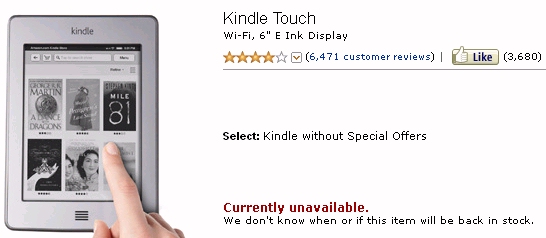
So the Kindle Touch is currently listed as “unavailable” at Amazon.com (as shown in the screenshot above), followed by an even more discouraging notice. “We don’t know when or if this item will be back in stock.” And there’s an article reporting the same message 10 days ago from the British web site Tech Radar. While an Amazon spokesperson told TechRadar their device was still available through other retail “partners”, they also confirmed that it was “no longer available at Amazon.co.uk.”
So it’s looking like it’s “dead for now” — though Amazon could always have a secret plan for reviving the Kindle Touch sometime in the future. But currently Amazon is also no longer showing the Kindle Touch among the strip of all available Kindle models that’s displayed at the top of each Kindle’s web page. And Amazon’s U.S. web page for the Kindle Touch is now simply pointing shoppers to their new touchscreen Kindle Paperwhite devices (officially released just three weeks ago), which Amazon describes as a “newer model of this item.” Unfortunately, the new Paperwhite, with its built-in front lighting, is significantly different from the Kindle Touch, and it’s drawn at least a couple of dissatisfied reviews. 676 users have now given the new Paperwhite an average rating of less than 3 and a half stars on Amazon (out of a possible five), which is lower than any previous model of Amazon’s black-and-white Kindles.
Amazon’s averaged four stars for their Kindle and Kindle DX, and four and a half stars for the Kindle Keyboard. And even though it’s only been available for less than a year, the Kindle Touch already has an average rating of four stars (after racking up 6,471 reviews on its web page at Amazon). To be fair, the new Paperwhite has also received many positive reviews, too. And I still think our Kindle word game still looks absolutely gorgeous on the glowing screens of the Kindle Paperwhite…
But to head off any disappointment, Amazon’s now taken the unusual step of “preemptively disclosing” shortcomings of the Kindle Paperwhite right on its web page, “most likely to get out in front of user complaints,” C|Net reports. Towards the top of the Paperwhite web page, Amazon’s now linking to a web page from “the Kindle Team” which presents three disclaimers. (“Learn more about certain design decisions and changes from prior generations to help make an informed purchase,” the link promises.) On the page, Amazon acknowledges that at the bottom of the screen, the Paperwhite’s built-in light will sometimes provide uneven illumination under certain lighting conditions, and that, unlike the Kindle Touch, it doesn’t have audio or text-to-speech capabilities. And there’s also only 2 gigabytes of on-device storage, half of the storage that was available on the Kindle Touch.
Amazon may be suffering a backlash after high interest in the device, which they’re apparently trying to address before “Black Friday” and the big holiday shopping season. One day after its official release, Amazon had already sold out of their Kindle Paperwhite, with an Amazon executive conceding that pre-orders “have far exceeded our expectations.” But even three weeks later, new orders are still being delayed 4-6 weeks, with Amazon also imposing a new limit on orders of two per customers. Of course, that information also makes more sense now that we have the other piece of the puzzle. If the Kindle Touch really is unavailable now, that could explain the higher-than-expected demand for the new touchscreen Kindle Paperwhite!
But it’s also got me wondering if Amazon might bring back their older Kindle Touch devices — especially if they’re having trouble filling orders for the Kindle Paperwhite during the crucial Christmas shopping season. I wouldn’t be absolutely surprised if Amazon suddenly announced they were bringing back the Kindle Touch for a special a sale on Black Friday. Amazon wants customers to be happy, so it’d make perfect sense to give Kindle them a choice for their touchscreen Kindles.
After all, Amazon’s real goal is to just to sell you a Kindle. They don’t necessarily care which one!
Goodbye to the Kindle DX!
October 17th, 2012

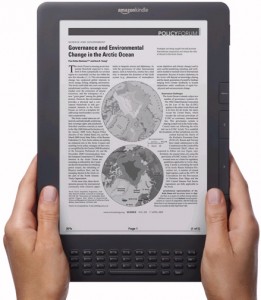
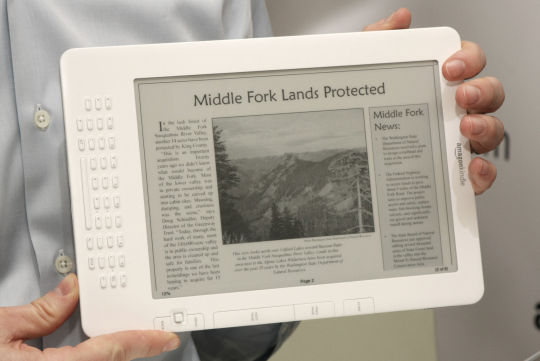
I own six Kindles, one of each kind — but the Kindle DX has always been my favorite. So I was sad to hear Amazon may be discontinuing it. It was one of the Kindle’s very first models — introduced in June of 2009 — but now you can no longer purchase one directly from Amazon. If you go to its web page at Amazon.com, it’s only listed as available from third-party sellers.
This is a surprise, because just a few weeks ago, Amazon seemed to suggest they’d keep selling the Kindle DX themselves. In September an Amazon Kindle executive named Jay Marine had surprised a technology site called The Verge with the news that Amazon is “pretty much done” with the Kindle DX. But the executive had also stressed that Amazon wasn’t abandoning it, though it wasn’t clear just what exactly he’d meant by that. The Verge site reported that Marine “did note that there may be a few more DX’s manufactured and it’ll continue to be sold online [my emphasis], before it completely falls off of the face of the earth.”
I guess maybe I’m just having trouble reconciling those two phrases — “continue to be sold online” and “falls completely off the face of the earth.” But Monday, NBC News reported in their technology blog that the Kindle DX would finally go “to e-reader heaven”. Calling it “one of the oldest e-readers offered by Amazon and certainly the largest”, they argued that most consumers seem to prefer devices with a smaller (and cheaper) screen. Although I think it’s worth noting that NBC’s blogger couldn’t get a definite comment from Amazon confirming that the Kindle DX was definitely being discontinued.

I think the Kindle DX turned off some shoppers with its higher-than-usual price tag. Even today in the third-party market, they’re still selling for over $250 – which is more than you’d have to pay for one of Amazon’s color, touchscreen Kindle Fire tablets! In fact, this summer when I’d tried selling off my second Kindle DX on eBay, I had trouble finding anyone who was willing to pay more than $200. Now if you’re trying to get rid of your Kindle DX, Amazon will let you trade yours in for a $90.75 gift card.
But on this day, as we say our possible goodbyes to the Kindle DX, I’d like to take a moment to offer up some appreciation. It was great for reading PDF files, because you could switch the screen’s orientation to “landscape” and then stretch the book’s pages all the way across all 10.4 inches of the screen. (In fact, I ultimately sold my second Kindle DX to a local college student, who looking forward to reading his textbooks on it!) And as one of Amazon’s earliest Kindles, it still came with built-in network connectivity (instead of requiring you to connect to a local WiFi network). I once read my Kindle DX during a camping trip up in the mountains, and it was also great if you found yourself waiting somewhere unexpectedly, like the lobby of a doctor’s office.
Of course, there’s one more thing — the thing that I’ll always love most about my Kindle Dx. There’s only one thing better than an e-ink screen, I’ve always said — and that’s a really big e-ink screen. The Kindle Paperwhite may offer you more contrast with its front-lit screen, but the Kindle DX accomplished the same thing the old-fashioned way: with a bigger screen! I like seeing my ebooks big, 7.2 inches wide by 10.4 inches tall.
But apparently, if Amazon’s moves today are any indication, there just weren’t enough people who felt the same way.

Remembering Steve Jobs, One Year Later
October 6th, 2012

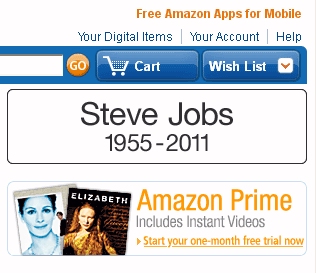
Exactly one year ago, Amazon was posting a memorial to Steve Jobs on the front page of Amazon.com. It read simply: Steve Jobs 1955 – 2011. When you clicked on the link, it went to Apple.com, which had posted the same words beside a picture of their co-founder. All across the web, people were remembering the man who’d helped to change their lives. And as I’d sat down to write about Steve Jobs on my desktop computer — I’d realized that he’d actually helped invent the desktop computer.
Friday saw people marking the one-year anniversary of Steve’s death, so I thought I’d take a moment to remember what I’d felt on that day. I’d say that it’s a legend in Silicon Valley which is probably worth remembering today. 36 years ago, at the age of 21, Steve Jobs teamed up with Steve Wozniak to sell home-built personal computers from Jobs’ garage.
Jobs didn’t design those first computers, but his personality helped launch the personal computer revolution. When he was 29 years old, he’d tried to lure Pepsi’s senior vice president of marketing to Apple. Unfortunately, the VP had already decided against accepting Jobs’ offer before he’d even sat down for their lunch. But he’d changed his mind after hearing a speech from the passionate young visionary. Jobs argued, “Do you want to sell sugar water for the rest of your life, or do you want to come with me and change the world?”
Most people know the highlights of Jobs’ life. (That year was 1983, and the next year Apple would release their legendary Super Bowl commercial arguing that the new Macintosh computers would show people “why 1984 won’t be like [George Orwell's] 1984.”) But by building Apple into a successful brand, Apple helped legitimize personal computers, proving there’s a market for “consumer technology.” And under Jobs’ leadership, they proved it again two decades later with new mobile products, which ultimately helped to pave the way for Amazon’s Kindle.
On the day that Steve Jobs died, even my friends who used a PC were still sharing fond and grateful thoughts — along with nearly everybody else — and you could really see signs everywhere of an almost global response. The best-selling book on Amazon was Steve Jobs — which at the time was a yet-to-be released biography by Walter Isaacson (a former CNN chairman and the managing editor of Time magazine) which Amazon later declared was one of the 100 best books of 2011. On that day, it also became the third best-selling ebook in Amazon’s Kindle Store (and, presumably, it was also available in Apple’s iBookStore.) The founder of Facebook even posted a personal statement about Steve. “Thanks for showing that what you build can change the world.” One year later, more than half a million Facebook users have clicked the “Like” icon to show they agreed.
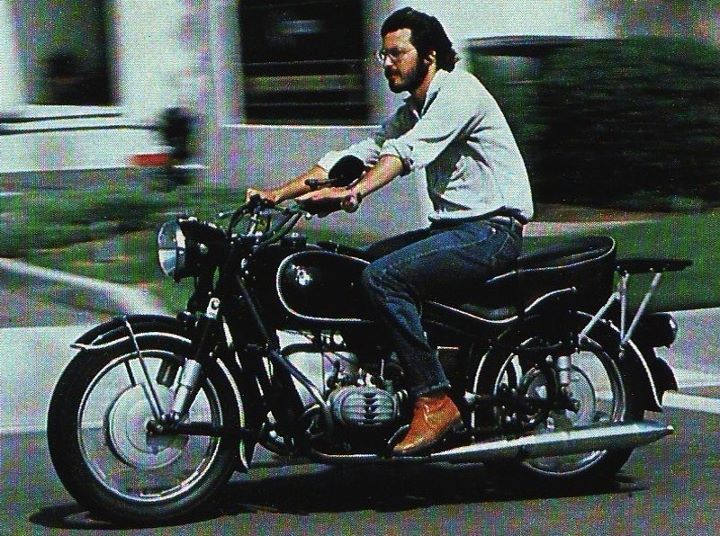
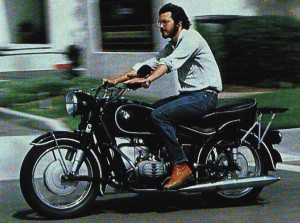
In fact all across Facebook, nearly all my friends were posting their own reaction. “I tend to think of him as ‘Uncle Steve’,” wrote a friend of mine who worked at Pixar. “That is what at lot of us called him at Pixar while I was there, because Uncle Steve took care of us. And when I did see him around Pixar, more often than not he was smiling and seemed happy… Good job Uncle Steve.” My friend Tom — a motorcycling enthusiast — shared one of his favorite photos of Jobs riding a motorcycle. “Ride on, Steve,” Tom posted. “You’ll be missed…”
But there’s a forgotten legend about Jobs — the “wilderness” period between 1985 and 1997 when he’d parted ways with Apple to start his own computer company. “Don’t let the noise of others’ opinions drown out your own inner voice,” Jobs once said. “And most important, have the courage to follow your heart and intuition. They somehow already know what you truly want to become. Everything else is secondary.”
Job was determined to import the “garage start-up” feel to his new company, Next Computer. “He abandoned conventional corporate structures, instead making a ‘community’ with ‘members’ instead of employees,” remembers Wikipedia. Besides the open floor plans, everyone received exactly the same salary when they started — with regular raises and performance reviews — and “to foster openness, all employees had full access to the payroll.” Everyone at Next was paid a month in advance, and in one building the company even hosted temporary art exhibitions using an in-house curator!
Jobs later said his time outside of Apple was the best thing that happened to him — “The heaviness of being successful…replaced by the lightness of being a beginner again, less sure about everything. It freed me to enter one of the most creative periods of my life.” If you ask a geek, they’ll tell you that Next Computer helped to popularize the “object-oriented programming” style of designing software which has since become an industry standard. But in the popular imagination, it’s Jobs’ excited ambition that you think of when you imagine the head of a cutting-edge technology company.
He gave good tradeshow, I told my girlfriend — and of course, Mac enthusiasts fondly remember Jobs’ return to Apple. Much of the technology developed at Next found its way into Apple’s computers, and
Apple’s sales increased as the company introduced a series of new devices like the iMac, the iPod, and the iPhone. The week that Jobs died, I’d been writing a post about how Apple would respond to Amazon’s new Kindle Fire tablet. But Jobs had already been thinking about the answer for at least 15 years.
I believe Steve Jobs recognized that desktop computers were just the “first generation” of devices. If there’s a pattern after his return to Apple, it’s a focus on smaller and smaller devices. Jobs recognized that technology was going mobile, and he was already positioning his company for the future. “Don’t you see what’s happening?” argues one technology site. “PC’s are 1990, man! Handheld devices are approaching the processing power of PCs – and everyone has at least one… It’s like Microsoft just cornered the market on Univacs.” And by 2007, Apple was already selling just as much recorded music as the entire chain of Target stores — and more recorded music than Amazon.
On Facebook, my friend Joab had shared his favorite comment from the technology web site, Slashdot. “Bill Gates put a computer on every desk; Steve Jobs put a computer in every pocket, and in every purse.” But one of the most moving photos I saw showed a San Francisco memorial service where a mourner held a picture of Steve Jobs…on their iPhone.
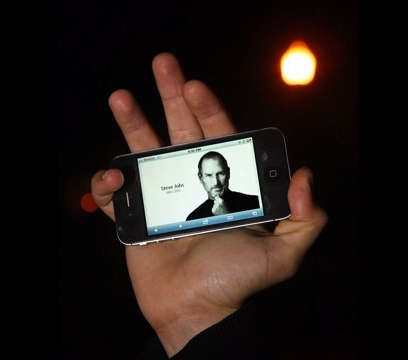
And my friend Jonathan posted a link to a new memorial in Boston. “Being the richest man in the cemetery doesn’t matter to me…” reads the inscribed quote from Jobs himself. “Going to bed at night saying we’ve done something wonderful…that’s what matters to me.”
Why Amazon’s Discontinued the Kindle Fire – Three Great Theories
August 30th, 2012

Amazon’s made two big announcements in the last week – both about their Kindle Fire tablets. And now technology watchers are trying to put the pieces together, offering up their best guess about what Amazon is really up to!
Earlier this month, Amazon was temporarily sold out of their Kindle Touch – and bloggers took it as a sign that Amazon was about to release a new model within a week. Instead, Amazon announced a big press event for September 6th — exactly one week from today. And this morning, the anticipation continued to build as Amazon offered another tantalizing piece of information: that they’d sold every last one of their current Kindle Fire tablets, and they apparently weren’t going to make any more of this model.
“We’re grateful to the millions of customers who have made Kindle Fire the most successful product launch in the history of Amazon…” Amazon’s CEO Jeff Bezos said in a statement, confirming Amazon was “sold out” of their current Kindle Fire, but adding that “we have an exciting roadmap ahead…” If you visit the current Kindle Fire’s page on Amazon, you’re now told that they’re available from “these sellers”. Amazon’s basically pointing to people who are selling used Kindle Fire tablets.
But why did Amazon discontinue sales of their original Kindle Fire tablets? Here’s some of the best theories.
Amazon Misjudged Their Own Launch Date
You can’t just stop the production of a technology product with one phone call. Amazon has to scheduled the delivery of all the necessary electronic components well in advance, and the Associated Press seems to think that today’s just the day that the parts ran out. (“Thursday’s announcement that the first model is ‘sold out’ suggests that Amazon halted production a while ago to retool for a new model.”) Unfortunately, this leaves Amazon with no tablets to sell for the next seven days. But maybe Amazon actually has something to gain by halting production…
Amazon’s Deliberately Raising Expectations
Amazon’s comment about an exciting upcoming “road map” seems like a not-so-coy hint that next week’s press conference will be about the next generation of Kindle Fire tablets. And at the technology site Slashdot, at least one poster thinks this is all part of a very deliberate campaign by Amazon. “This development strikes me as a classic ‘Build anticipation for KF2′ thing, not a ‘Phew, we got rid of the things. They were taking up space’ type complaint. ” Next week, when Amazon announces a new tablet, there’ll now be a full week of pent-up demand for a color Kindle tablets.
Amazon’s saving money
I stumbled across an interesting statistic this week. In November, Time magazine’s “Moneyland” site calculated that Amazon was actually losing money with its Amazon Prime shipping service — and that on average, Amazon was losing $11 for each Prime customer. “They must have been subsidizing the Kindle Fire,” argues another commenter at Slashdot. “That’s the only reason I can think of that they would stop making money [by ending Kindle Fire sales early]. It’s like how Microsoft used to lose money on every Xbox sold, or Sony and the PS3. They wanted a foot in the door of the market, and their next offering will be something that makes them money for each unit sold, rather than losing them money.”
What’s the real story? Who knows. But Amazon is obviously planning something big, . And if their plan was to increase the curiousity among Kindle owner — it’s working!
The Best Free Videos on Amazon Prime
August 28th, 2012

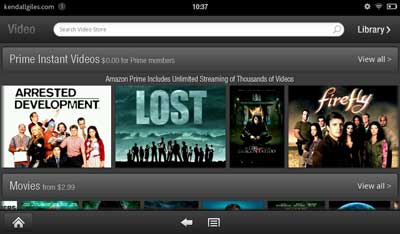
I love Amazon’s supply of free videos that you can watch if you’ve signed up for their Prime shipping service. You can watch them through the web, or on a Kindle Fire tablet, or even on an Xbox 360 or a PlayStation 3. Even if you’re not a Prime subscriber, you can still watch them if you’re willing to pay a small fee — usually $1.99 per video. (And Amazon gives you a free one-month trial when you register your Kindle Fire tablet.) But I was fighting a cold on Monday, so I spent a whole day exploring which videos are available for free in the Prime section of Amazon’s “Instant Video” library — and there’s a lot of interesting things to choose from!
tinyurl.com/PrimeInstantVideo
Last week Amazon even announced a licensing agreement with NBC, so now there’s an even bigger selection. (“We’re excited to be working with NBCUniversal to add their award-winning lineup of TV shows such as Parks and Recreation and Friday Night Lights to Prime Instant Video,” Amazon announced in a statement.) But Amazon’s Prime video library already had a pretty good selection of new and classic TV shows to choose from. Yesterday Amazon announced that their most watched TV show is Downton Abbey — but you’ll see many more familiar names on Amazon’s list of their most-popular TV shows.
Glee
My Name is Earl
24
The West Wing
Grey’s Anatomy
Science Fiction
Fringe
Doctor Who (Season 1)
Battlestar Galactica
Firefly
Buffy the Vampire Slayer
Star Trek (the original series, Enterprise, Deep Space Nine, and Voyager)
Red Dwarf
Stargate SG-1
The X-Files
Avatar: The Last Airbender
Lost
Alcatraz
The Twilight Zone
Comedy
Arrested Development
King of the Hill
Hot in Cleveland
Chappelle’s Show
’90s Favorites
Dawson’s Creek
Party of Five
21 Jump Street
Beverly Hills 90210
Ally McBeal
NYPD Blue
PBS / BBC
Monty Python’s Flying Circus
Fawlty Towers
The Civil War by Ken Burns
Upstairs, Downstairs
The Office (the original British version)
The French Chef with Julia Child
The Tudors
There’s also a surprisingly good selection of shows for children, including Dora the Explorer and SpongeBob SquarePants, but also Jim Henson’s forgotten HBO show from the 1980s, Fraggle Rock. And I discovered that you can even delve back into the vault for classic children’s shows, including every single season of Mister Roger’s Neighborhood, and the original Electric Company with Morgan Freeman, Bill Cosby, and Rita Moreno.
I was amazed that I my Kindle Fire pulled up TV shows that I hadn’t seen in more than 40 years, since I was a kid — including Archie cartoons from the 1960s! I used to come home from grade school to watch Gilligan’s Island or the original Star Trek — and now here were the same shows, being transmitted to my tiny handheld tablet! There’s even a selection of I Love Lucy episodes, plus “guilty pleasures” like Alf.
Of course, there’s also a pretty good selection of movies in Amazon’s Instant Video library, including some that are free to Prime subscribers.
The Matrix Revolutions
Ocean’s 11
South Park: Bigger, Longer & Uncut and Team America
Mission: Impossible (I and III)
Beverly Hills Cop
The Addams Family
Food, Inc
Alfred Hitchcock’s To Catch a Thief
The Girl with the Dragon Tattoo (the original Swedish version)
What Just Happened
The Return of the Pink Panther
Bullitt starring Steve McQueen
Basic Instinct 2
Just like in the TV section, I also saw some movie titles here that I haven’t seen in decades – so it’s a lot of fun seeing just what Amazon has available. I recommend browsing the video section – especially if you have some time to kill!
point your web browser to tinyurl.com/PrimeInstantVideo
Kindle Fire Prices Drop on the Second-Hand Market
July 23rd, 2012

I’ve been shopping for a Kindle Fire tablet, and I made a startling discovery. You can save a lot of money if you buy a second-hand tablet, either in an auction on eBay, for example, or through an ad on Craigslist. Over the last four days, I’ve checked 35 different auctions on eBay. And the average winning bid for those 35 auctions was just $140!
In fact, 13 different bidders ultimately won a Kindle Fire for less than $140. Two people even won one of Amazon’s color touchscreen tablets for just $113.88, and two more paid just $121. I’ve really been amazed at some of the low prices that bidders are getting on a used Kindle Fire. People have won the eBay auctions with bids of just $126.48 or $127.00, and I saw seven different people win a Kindle Fire tablet with bids between $130 and $139!
It’s a great way to save money, since most bidders end up getting a 30% to 45% discount. In addition, at least some of the auctions include an expensive case (which would normally be sold separately). It’s one of the advantages of buying from a individual, who may just want to get rid of their Kindles and accessories at the same time. Obviously there’s also some people who are selling damaged devices, but each of the 35 auctions that I checked included a Kindle Fire tablet that was fully-functioning, and without any obvious defects (like a scratch on the screen). And they should all be under warranty anyways, since Amazon released these devices less than a year ago.
The prices seem to be even cheaper on Craigslist (though that depends on what city you’re in). And of course, there’s no “selling history” available when you’re shopping on Craigslist. But my girlfriend pointed out the biggest disadvantage of buying a second-hand Kindle now. Soon, Amazon’s expected to release a newer version of the Kindle Fire tablets. So if you buy one now, you’ll be missing out on all the new improvements which are just around the corner!
I think that might explain why the prices are so low on eBay – but I don’t want to wait. And there’s always an easy solution if you purchase a Kindle Fire now, and then decide later that you want to upgrade to the newer model. Let’s say Amazon does release an exciting new model of their color touchscreen tablets sometime in October.
Then you can always go back to eBay, and try to sell off your own Kindle Fire!
A New Rival for Kindle Fire Tablets
July 8th, 2012

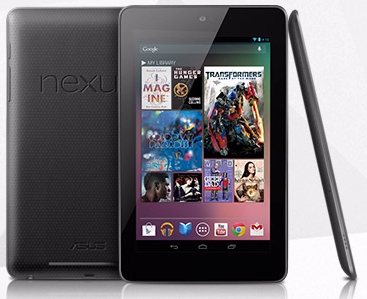
Google just announced a new tablet-sized device to compete with the Kindle Fire tablet. Google will release it in about a week, but it’s already getting some great reviews. Amazon had enjoyed one big advantage when competing with Apple’s iPad: their Kindle Fire tablet only cost $199. But Thursday, a New York Times reporter wrote that there’s also a $200 price tag on Google’s new Nexus 7 tablets, which “pretty much blows the Kindle Fire’s value proposition into a cloud of ash.”
Both devices have the same screen size, “but this time, you don’t get any sense that its creators skimped to keep the price down,” writes the Times’ David Pogue. He’s seen the Kindle Fire, which Amazon released last winter, but seems to prefer the designs of Google’s device even better. “It’s sleek and beautiful, with rounded edges, unlike the sawed-off rectangular back of the Fire, and a ‘pleather’ back panel that feels great. And it weighs 2.6 ounces less than the Fire, which makes a world of difference. It’s slightly thinner, too…”
I’m such a Kindle loyalist, that originally I’d laughed off Google’s Nexus tablet. But Kindle owners may be the ones who benefit most, in the long run. For a while we’ve heard rumors that Amazon’s releasing a newer version of their Kindle Fire tablets very soon. But Amazon will have to make their tablets even better if they have to start competing now with a slick, low-priced new tablet from Google.
And in a way, Amazon has already done a big favor for the shoppers who buy tablet devices. The New York Times asked Google’s Nexus team “if it was playing a game of razors-and-blades here, losing money on every tablet with the intention of making money by selling books, movies, music and TV shows.” That’s Amazon’s business model — selling the devices almost at cost – and now it looks like it’s become an industry standard. The Times reports that Google isn’t earning a profit when they sell the tablet, either through their web site or in an offline store…
But what else is there to like, besides the low price, in Google’s new tablet? For starters, there’s a built-in GPS system, which makes it perfect for navigation. (You can even save a city’s worth of Google maps to its drive, so you can navigate without using an internet connection.) The Times’ reporter also liked the way Nexus had a built-in bluetooth and WiFi capabilities, plus a camera in the front of the tablet for making video phone calls.
But there’s still some things he preferred about Amazon’s Kindle Fire tablets. With the Nexus 7, you can only download a song that you’ve purchased twice. In Amazon’s store (and in the Apple Store), you can re-download a song whenever you feel like it. And watch out if you want to watch TV shows. Google’s store doesn’t have anything from either CBS or Fox — or from the biggest cable networks, like WB, HBO, and MTV/Nickelodeon. I like the way the reporter ended his article, concluding that the Nexus tablet was “sweet,” with a smoothness to both its hardware and software that rivals Apple’s iPad.
“[I]ts luxury humiliates the Kindle Fire,” he writes, while noting that Google now has to hope that its cool device can attract some cool content into their store. “[I]t’s possible that this tablet may finally help solve Google’s chicken-and-egg problem.
“Maybe once it becomes popular, people will finally start writing decent apps for it, and more movie and music companies will come to the Google Play store.”