Secrets of Amazon’s Kindle Team
April 12th, 2013

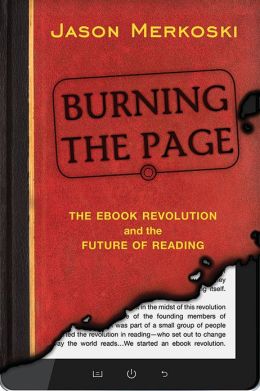
I’ve read some books by former Amazon employees, but this one is special. It’s written by one of the founding members of Amazon’s Kindle team, who “wanted to change the world,” according to the book’s first chapter — “and we did!” In fact, Jason Merkoski was actually the program manager for the Kindle on the day that it launched. This week he’s released a fascinating memoir titled “Burning the Page” with some interesting insights into the future of reading. And to celebrate the launch of his book, Jason’s also demonstrating some brand new ways to blur the boundaries between ebooks and the internet!
tinyurl.com/BurningTheBook
Merkoski’s describing his book as recollections of “the time I spent working on the front lines of the ebook revolution.” (On his first day on the job, he’d been treated to “an overhead projection of Jeff Bezos’s head welcoming me to work, telling me to have fun and make history.”) When he later ends up waiting for a meeting in Bezos’s office, Merkoski gazes out the window, and tries to imagine the way Amazon’s founder sees the world. (“He had a telescope in his office and pictures of his kids on the wall…”) At one point Merkoski even calls his book “the true story of the ebook revolution”, and there’s some fun details about life inside Amazon.
But he really digs into the meaning of reading. Merkoski writes at one point that “by crossing the chasms of culture and language [through ebooks], humanity itself becomes connected.” Later he even says boldly that “I think there’s really just one book, the book of all human culture,” and then he describes his own vision of a Facebook for Books, “where all books can interact and link to one another. But it’s not just talk, and over the last three days he’s actually put his ideas into action.
On Twitter and Facebook, Merkoski has already revealed some new experimental tricks that his ebook can perform online — part of “the brave new world of what I call ‘Reading 2.0′”. Friday afternoon Merkoski had a big announcement on Twitter. “Amazon dropped the price on my book – get it now for your weekend reading if you’re interested…” In fact, they’ve lowered the price to just $7.69 (a 23% discount). But it was later that I discovered that Merkoski has also found a unique new way to connect Twitter to his book.
At the end of the first chapter of “Burning the Page”, Merkoski included a link to a social app offering his readers a way of connecting to other readers and the author, plus “surprises all along the way.” He promises it’s a combination of a virtual book club, a chance to interact with the book’s author, and “a thoughtful friend who brings you special notes and treats.” Each chapter ends with a new link, and when readers click on it, there’s another new surprise. It could be a link to unannounced bonus chapters, a personalized autograph, or even “unexpected objects falling out from between the ‘pages’ of the book…” And Merkoski promises that when you finish reading his book, you’ll receive a personalized message from the author himself.
“I look forward to talking to you, because the greatest revolutionaries in the ebook revolution are the readers.”

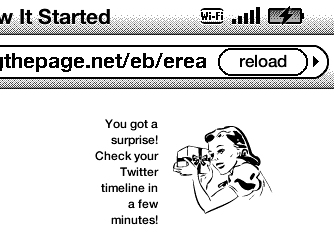
When you click a link in the ebook, it takes you to your Kindle’s web browser, displaying a message about what your next surprise will be!
The book has some fun passages that make the story of the Kindle seem even more colorful. Later in the book he imagines the workshop where Gutenberg published the first book in 1453 as being a lot like the newspaper printing plant where his own father worked. And soon he’s wondering if Amazon’s Kindle project in the 21st century was also its own high-tech version of Gutenberg’s workshop, “an alternate, over-caffeinated, sugar-high universe.” But I think he sums up the whole experience nicely in one wonderful sentence.
“Yes, I did have fun at Amazon, and I made history.”
The Kindle Joins the PTA
March 5th, 2013

America’s Parent Teacher Association includes millions of parents and teachers — but this year, they’re letting Amazon’s Kindle be the exclusive partner of a new program. To improve the reading skills of grade school students, the program will teach parents some fun ways to get involved in their children’s reading — and for the rest of the year, the program will officially be called The PTA Family Reading Experience, Powered by Kindle.
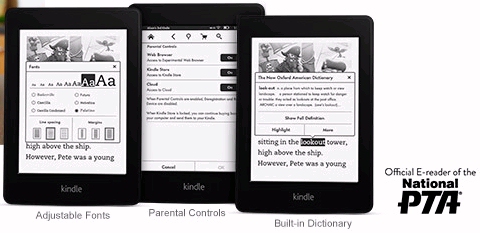
Besides ebooks, “The progam also encourages use of real books,” notes Fast Company magazine, “but it’s definitely a PR coup for Amazon, whose rival Apple has also been moving to increase its e-book educational appeal.” Amazon’s even created a special web page identifying themselves as “the official e-reader of the National PTA”. The page argues that the Kindle “was designed to make great books as accessible and engaging as possible, and kids say their enthusiasm for reading increases with e-books.”
“Parents love to see their children inspired to read more, especially with a device like Kindle that’s focused solely on reading.
It’s fascinating to see the way Amazon has now started marketing their e-readers as a family-friendly educational tool, with a pitch that the Kindle is “the perfect complement to children’s print books.” (Their web page also notes the Kindle’s storage capacity of over 1,000 books, “making heavy backpacks lighter,” and that each Kindle has a built-in dictionary which “supports real-time vocabulary development, while adjustable fonts and text sizes make each book just right for a child’s eyes and reading ability.”) Amazon’s even titled their page “Kids and Parents Love Kindle,” and they’ve also lined up an enthusiastic quote in the press release announcing their endorsement. “National PTA is honored to work with Kindle to provide parents with proven techniques for improving their child’s reading fluency, comprehension and passion…”
But the real question isn’t just whether this will help Amazon sell more Kindles, but also whether it help them sell more ebooks. So to that end, Amazon’s also created a new web page of “PTA Family Favorites”, which also touts their relationship with the new organization. “Kindle and the National PTA are working together to help families get more involved in their children’s reading and enhance their emerging interest in books, Amazon writes at the top of the web page. “These featured titles were most frequently cited in a survey of PTA members as books they love to read together as a family.”
I admit I enjoyed browsing the selection, to see if there were any books I recognized from my childhood. Amazon’s highlighting their ebook versions of “PTA Family Favorites”, separated into ebooks for different reading levels, with The Magic Treehouse series recommended for first and second graders (along with the Junie B. series and Alexander and the Terrible, Horrible, No Good, Very Bad Day)). For third and fourth graders, the page recommends the Diary of a Wimpy Kid series, along with Beverly Cleary’s books about Ramona. Their selection for fourth and fifth graders includes C. S. Lewis’s Narnia series, and their older-reader selections include The Lightning Thief, The Hobbit and Suzanne Collins’ Hunger Games trilogy.
I could think cynical thoughts about how Amazon’s involvement with the PTA is just another new way to promote the Kindle and Amazon’s Kindle Store. But mostly I’m just glad to see children being encouraged
to read some very good books.
Will Amazon Expand Same-Day Deliveries?
February 15th, 2013

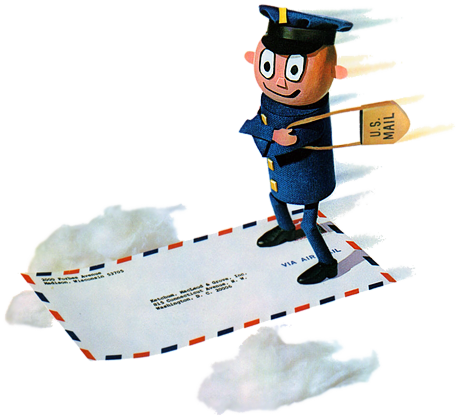
it’s not as crazy as it sounds. Amazon has already been testing same-day delivery in 10 cities since 2009, according to the Christian Science Monitor, and last month they reported rumors that Amazon might be expanding the program. And meanwhile the post office is already offering same-day delivery capabilities to businesses — at least in San Francisco. For the last eight weeks, the post office has been quietly testing this service (as a way to offset the money they’re losing from deliveries of traditional mail). It’s expected to raise up to $50 million after its first year just in San Francisco, according to an article in the Associated Press., which reports that “If things run smoothly, the program will quickly expand next year to other big cities such as Boston, Chicago and New York.”
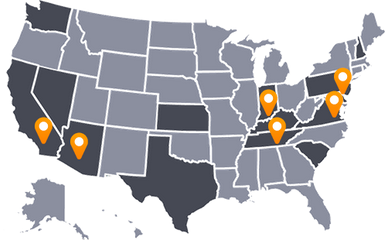
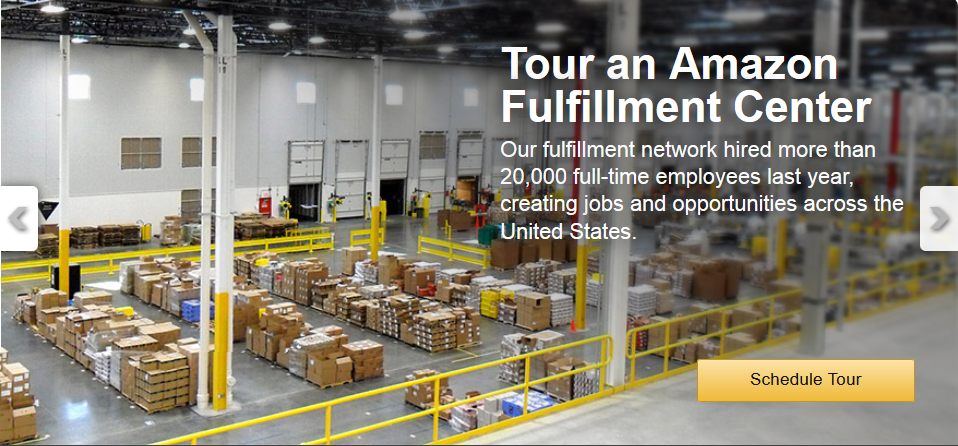
The post office has noticed that package deliveries are actually increasing at a rate of more than 10%, according to the article. (Maybe because people are ordering more things online?) And it also notes that Walmart — a major competitor to Amazon — is already offering same-day deliveries. Meanwhile, Amazon has been building more and more distribution centers in more and more states. Are we looking at the beginning of a war, to see which retailer can deliver packages the fastest?
But Wired asks a more interesting question: who’s going to be doing the delivering? FedEx and the other delivery services seem to insist on an intermediate step where all the packages are first collected together at their own distribution centers before being re-routed back out for deliveries. “To make same-day work, the orders must travel straight from the distribution centers to customers,” Wired notes — adding that post office seems to have a lot of carriers now with fewer and fewer letters to deliver.
To get a definitive answer, Wired even called a spokesperson for the U.S. Postal service, who seemed enthusiastic when he agreed that “We already have the existing infrastructure in place. That’s what sets us apart.” He wouldn’t speculate about whether the post office was going to end up offering same-day delivery services for Amazon’s packages, but he did hedge that traditional mail carriers can offer an attractive choice for companies who are exploring the same option. And to that possibility, he had one more hopeful thing to say.
“We’d never close the door on ways to expand our revenue.”
Amazon CEO Applauds “the Transition We’ve Been Expecting”
January 29th, 2013

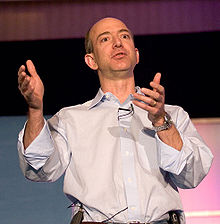
I always enjoy hunting for nuggets of information when Amazon makes their big announcements to stockholders. Today Amazon’s CEO, Jeff Bezos, revealed something new to think about. Amazon did sell more printed books this December than they had the year. But it was the smallest increase ever in the 17-year history of Amazon — a rise of just 5%.
Meanwhile, Barnes and Noble announced plans to close 200 bookstores over the next 10 years — about one-sixth of all stores. That’s America’s single-largest chain of bookstores — and Borders bookstores already declared bankruptcy in 2011. It’s hard to ignore the fact that there’s not a lot of growth now in the sale of printed books. Today Amazon’s CEO identified this trend as “the transition we’ve been expecting.”
And for comparison, he added that after 5 years, “eBooks is a multi-billion dollar category for us and growing fast – up approximately 70% last year.” After that stunning statistic, there wasn’t much left to say — except a big thank-you to all the people who’ve started buying ebooks from Amazon. “We’re excited and very grateful to our customers for their response to Kindle and our ever expanding ecosystem and selection.”
Amazon also shared some other interesting bits of trivia about the Kindle. For example, since it was introduced in September, the Kindle Fire HD has continuously remained Amazon’s #1 best-selling, most gifted, and most wished for product “across the millions of items available on Amazon worldwide.” And by the end of the year, Amazon’s worldwide best-seller charts showed that the top four spots had all been claimed by Amazon’s digital readers and tablets — the Kindle Fire HD, the Kindle Fire, the Kindle Paperwhite and the Kindle.
Amazon has always insisted they’re willing to lose a lot of money over the short term, as part of a grand master strategy of growing their customer base over the long-term. So they probably want investors to focus on this number: in just the last three months of 2012, Amazon’s sales totalled $21.27 billion. That’s up more than 22% from the same period a year ago — an increase of $3.84 billon. And Amazon’s sales figure would’ve been even higherif it hadn’t been for fluctuations in the world currency market, which cost Amazon another $178 million.
I don’t know how Wall Street is going to react to Amazon’s numbers, but I’m impressed. For the last three months of 2012, they averaged over $236 million in sales every single day. And as Kindle owners, we’re all part of that number – and a big piece off Amazon’s long-term strategy.
The Kindle makes it even easier to buy things from Amazon — even when you’re lying on your couch!
Fun With Amazon’s Customer Support
December 12th, 2012

I laughed so hard on Saturday night. And I’ve got a great little story about Amazon’s customer support. I don’t usually share personal stories, but this one feels like it’s worth an exception. It all started because it had been a long weekend, and I’d just wanted to curl up and watch a video on my Kindle Fire…
Unfortunately, the Kindle’s video store ended up warning me that the video I’d ordered was taking longer than expected to download – and then never delivering it! It wouldn’t let me place the order again, but the video still wasn’t showing up. I’d tried Amazon’s web site, but got the exact same error message. So I clicked on the “help” link — and that’s when the fun began…
Now let me explain something. It was raining, and after running around town doing holiday errands, I’d just wanted to relax. And I’d rememered that Amazon gave me a $3.00 credit for videos for my Kindle Fire, but I only had one more day to use it. I’d spent $2.00 to watch an episode of South Park, but there was still $1.00 left. And I’d wanted to watch something comforting, maybe an old favorite from my childhood…
It turns out that one of Amazon’s options for customer support was to have an online chat in real-time. And yes, I wanted my video and I wanted it now, so it seemed like the best solution. Besides, I could test Amazon’s customer support, to see just how good they are at troubleshooting. And I was impressed that someone turned up right away — though since it was 7 p.m. on a Saturday, I suspected he might be in India…
“You are now connected to Saransh from Amazon.com,” explained the text that Amazon displayed in a chat window on the screen. And I was a little embarrassed about having to admit what I’d been trying to watch to a live person. “I ordered a Tom & Jerry cartoon on my Kindle Fire,” I explained sheepishly, “but it keeps giving me an error about how it’s taking longer to arrive than expected…”
“A member of our Amazon Instant Video team will need to help you with this,” Saransh typed, adding “Please hold while I transfer you. One of our Amazon Instant Video Specialists will assist you shortly.”
All this fuss over a cat-and-mouse cartoon from the 1940s, I thought to myself. But I was really impressed at the instant customer support Amazon was providing. And I didn’t have to wait too much longer before another support association started typing in the window. His name was Sneha, and he typed hello, then added, “I will look into this straight away for you. May I place you on hold for two minutes, while I look into this?”
“Hi Sneha,” I typed, not sure how friendly I was supposed to be. “Sure. Go ahead.” And he began researching the problem.
His first search seemed to come up empty-handed. “I do not see the order on your account pertaining to Tom and Jerry,” Sneha typed. “Were you able to place to place the order or you were in the process of doing that?” But then he typed, “Okay. I see the order now. Sorry…” Unfortunately, by then I was already typing away.
“I placed the order on my Kindle Fire, and also tried again on video.amazon.com.” I realized that I hadn’t given him the exact title, so I also typed in. “It’s called ‘Puss Gets the Boot.’ Tom & Jerry are just the name of the characters…” But then I realized he didn’t need anything that I’d typed. Look at me, I thought, jabbering away with all this extraneous info…
“Yes, I got it ,” Sneha typed. “Thank you :)” So then, just for laughs, I typed…
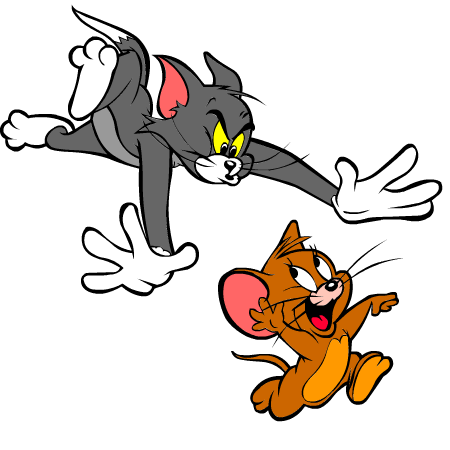
“Tom is the cat, and Jerry is the mouse.”
I described the whole surreal moment to my girlfriend, and then joked about even more extraneous things I could’ve typed into the chat window, if I’d wanted to seem like even more of a clueless user. “They chase each other around. The cat is grey. See if you can find a cartoon like that. Because it’s probably them…”
And we laughed and laughed…
But I really have to hand it to Sneha, because he did solve my problem almost instantly. He told me to log out of the Instant Video page on Amazon, and to basically try turning my Kindle Fire off and on. My girlfriend joked that it was like the catch-all advice that was always offered by the geeks in a British sitcom called The IT Crowd — but in this case, it really worked. The video page on my Kindle Fire now showed one more video in my library: the Tom and Jerry cartoon Puss Gets the Boot.
And not only did Amazon solve my problem immediately, but Sneha also endeared himself to me with the way he responded after I’d explained that Tom was the cat, and Jerry was the mouse. He typed back into Amazon’s support window…
“Its my favorite cartoon show…”
Hurricane Sandy vs. Amazon
November 5th, 2012

My friend Nate lives in New York City — and he’s really grateful to Amazon. On Friday Nate told a remarkable story about life in the water-damaged city after it was hit by Hurricane Sandy. It was the largest hurricane ever to come out of the Atlantic Ocean, and it had had a huge impact on the millions of people who lived in the big city.
New York’s subway system wasn’t providing any service below 34th street “for an undisclosed period of time,” Nate posted on his Facebook page, “and cabs cost about $25 each way to work right now (and sometimes more).” But Nate felt guilty using any gas-powered vehicle, since it was obvious that there was going to be an ongoing shortage of gasoline. The answer turned out to be surprisingly simple: Nate decided to get a bicycle! “I tracked down a decent folding bike for less than it’ll cost in taxis next week alone,” he eventually posted on Facebook.
But here’s the funny part. Nate just placed his order on Amazon.com, around 4 p.m. Thursday afternoon. “I’ve got Amazon Prime, so the order shipped for free…” he posted the next morning on Facebook. And his bicycle had already arrived! “In 16 hours,” he posted in amazement. “A BIKE. To Post-Sandy NYC. For Free.
And Amazon was also delivering supplies to other New Yorkers, too. (“Take a guess,” joked The Huffington Post. “Why were two-gallon gas cans one of the most popular items sold on Amazon this week?”) People were also ordering gas-powered generators and even lanterns from Amazon, according to the Post‘s article. Difficult times called for creative solutions, and to get the supplies they needed, at least some people turned to Amazon.com for things they couldn’t find locally.

In fact, in a comment on the article, someone reported that my friend Nate wasn’t the only person who was riding a bicycle across the gas-starved city. “There are thousands of them on the streets of New York City right now.” New York’s transportation department estimated that just on Thursday, there were 17,000 more bicyclists crossing the Brooklyn Bridge and the three other biggest bridges in Manhattan, Queensboro, and Williamsburg. Most of the bikes were probably in New York before the flood, but Nate was delighted that he could actually get one shipped in!
After the hurricane, people began to look at the world a little differently, and it was nice to hear stories about people reaching out to help others. One fitness center even posted a sign offering free hot showers or an outlet for recharging cellphones to anyone who needed it, Nate posted on Facebook. “I’m trying to figure out how I can order stuff from Amazon to be delivered to the people who need it on Staten Island or the Jersey Shore,” he added later, “because apparently Amazon are the only people who can get things places right now.” It’s nice to see Amazon’s expertise in shipping having a positive impact on people who really need it.
One of Nate’s friends even joked, “Maybe the government should commandeer Amazon until the crisis is over.” But Nate wasn’t even sure that was a joke, because he’d been so amazed by the way Amazon performed after the hurricane. “That was kind of my point. I was looking at getting some solar panels or generators shipped out using Amazon Prime. They have them.
“Apparently they could deliver them in 16 hours if I ordered them!”
Amazon Sells Out of Kindle Paperwhite!
October 3rd, 2012

If you’re trying to buy the new Kindle Paperwhite, there’s a surprising message today on Amazon.com. “Due to popular demand, orders placed today are expected to ship in 4 to 6 weeks.” Apparently one day after its official release, Amazon had already burned through their whole inventory of the new Kindle Paperwhite. Plus, for now, they’re limiting new orders to just two Kinde Paperwhites per customer.

It was just Monday that a Kindle executive acknowledged that pre-orders for their newest version of the Kindle “have far exceeded our expectations.” Amazon didn’t reveal how many they’ve actually sold, but their press release did include some excerpts from positive reviews of their newest Kindle. Time magazine called it “the best e-reader yet,” for example, and the technology site Gizmodo adds “Forget everything else, this Is the e-reader you want.”
At first I’d wondered whether Amazon had just manufactured their first batch of Kindle Paperwhites in a smaller-than-usual quantity. This would help create the perception that their new device has already become so wildly popular that it was selling out – when in fact, Amazon just hadn’t built that many of them in the first place. But I had to admit that the Kindle Paperwhite has been getting a lot of genuinely positive reviews from some high-credibility technology sites. A headline at CNN even declared Monday that the Kindle Paperwhite “is king of the e-readers.”
And the technology site Engadget called the Kindle Paperwhite simply “the best e-reader out there,”
So what’s the big deal? I thought the best explanation came in this review from The Huffington Post. “A luminescent e-reader screen is one of those new technologies, like HDTV or the bidet, that spoils you so badly, and so thoroughly changes your preferences and expectations, you won’t want to go back to a device without it once you’ve tried… ” They do note that Barnes and Noble has already released their own digital reader with a built-in light for the screen — more than five months ago — but then goes on to say that Amazon’s is better, spreading the light much more evenly across the entire screen.
Maybe that explains why the Kindle Paperwhite is getting such positive reviews. The Technology and Science Editor at NBC News Digital notes that it’s about more than just built-in lighting. The glowing screen increases the contrast between the black letters on the screen and their background, which is now a glowing white. That’s a big improvement, and he ultimately gave the Kindle Paperwhite one of it most emphatic endorsements.
“It can be declared hands down the best e-reader yet, without any need for qualifiers.”
Did Amazon Botch The Release of Their New Kindles?
September 6th, 2012

Amazon just announced a brand-new, high-contrast Kindle called the PaperWhite! (You can pre-order the new touchscreen devices — with their new built-in lights — at tinyurl.com/KindlePaperWhite ).
But the way Amazon handled today’s announcement left me wondering if they’d made a big mistake…
I still remember that big day last September when Amazon announced their new Kindle Fire tablets. Besides a press conference, there was a message from Amazon’s CEO on the front page of Amazon.com. (“There are two types of companies,” he wrote, “those that work hard to charge customers more, and those that work hard to charge customers less…We are firmly in the second camp.”) A month later, Amazon revealed that that historic day had been Amazon’s “biggest order day ever” for a newly-released Kindle, “even bigger than previous holiday peak days.” But this morning I was wondering if Amazon was missing their chance to make history again.
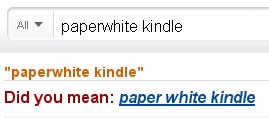
Because while they were announcing two new Kindles, including a black-and-white reader called the Paperwhite, it wasn’t possible to buy it at Amazon.com. You couldn’t pre-order the Paperwhite, and there were no information pages at Amazon.com, until nearly 4 p.m. EST. Even during Amazon’s big press conference about the new device, if you searched Amazon for the Paperwhite Kindle, it didn’t return any matches.

Amazon didn’t actually list their newest Kindle at Amazon.com until nearly 1 p.m.! “I want my Paperwhite. Now!” someone posted Thursday morning in a customer discussion forum at Amazon.com. “Or at least let me order it now. :)”
“I’m with ya on this one!” posted another anxious Amazon customer…
“I have no patience, I can’t wait to order,” added a third customer. Someone even jokingly posted a link instead to Amazon’s web page for some flower seedlings — the paperwhite Narcissus. (“Very Fragrant!”) Ironically, you could already buy a two-year warranty for your new Paperwhite Kindle by Thursday morning. It just wasn’t possible to actually buy the Kindle yet!
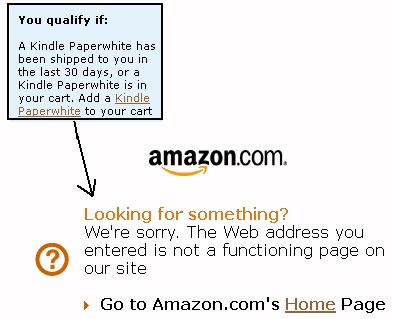
Amazon’s web page for the extended warranty even featured a link titled “Add a Kindle Paperwhite to your cart.” But when you clicked it, it just took you to Amazon’s standard error page that said “Looking for something? We’re sorry. The Web address you entered is not a functioning page on our site.”

It was fun to read the comments that Kindle owners left in anticipation of the new device. “At least you have the option of new Kindles in the US…..” complained one poster in Amazon’s discussion forum. “Nothing as per usual for the UK market :-(” But an American poster responded that at least U.K. shoppers had access to one of England’s independently-produced ales. “On the other hand, we in the USA have a heck of a time finding Theakston’s Old Peculier.”
There were at least half a dozen eager purchasers (who apparently couldn’t find a link on Amazon where they could buy the device all morning). I only saw one negative comment — a complaint that Amazon was only releasing a touchscreen version. It seems like Amazon had a lot of potential buyers for their new Paperwhite Kindle, who could’ve helped Amazon reach a new sales record. But you can’t sell any new Kindles until customers have a web page where they can actually buy them!
Exciting New Ideas From Amazon
August 15th, 2012

It’s hard to keep up! While we’re waiting to see if Amazon’s going to announce some new Kindles, they’ve already quietly announced some other very big initiatives. There’s some good news for students, plus an interesting experiment that improves the way packages get delivered. And this week, Amazon even announced an exciting new feature for current Kindles!
Basically, Amazon’s created an extension for the Chrome web browser that lets you grab a copy of any page off of the web, and then have it sent to your Kindle! The content can even be sent to your Kindle apps, so you could also read those Kindle-ized web pages on your smartphone or tablet. And you don’t even have to send the whole web page — you can also just select part of the text. “We send just the content you want and not the distractions,” Amazon explains on their web page. (The new feature lets you preview everything before you send it, of course, so you can make sure all of the formatting is going to come through.)
A reporter at C|Net had the same question I had: what if you’re not using Chrome as your web browser? But apparently Amazon had already posted the answer in one of their Kindle forums. “Support for Mozilla Firefox and Apple Safari is coming soon,” wrote an Amazon staffer named Kevin G. (Er, though he didn’t say anything about whether there’d also be a version made available for Microsoft’s Internet Explorer!)
It just goes to show you that Amazon’s still tinkering with new ways to improve their Kindles (and to sell you more ebooks and other products). Last week Amazon announced that they were going to let college students rent textbooks from Amazon, at a savings of up to 70% from what it would normally cost to purchase the textbooks! “At the end of the rental period, returns are free and simple with a prepaid, printable label,” Amazon explained in a press release. And they included an encouraging quote from Ripley MacDonald, Amazon’s Director of Textbooks. “It’s now easier than ever for students to get the books they need, in the format they want, at affordable price!” (The new service is available at amazon.com/textbooks )
But there’s an even more interesting experiment, which the Wall Street Journal described as “Amazon’s new secret weapon.” For the last year, Amazon’s been quietly installing metal lockers in 7-11′s and other convenience stores, as well as in drug stores and grocery stores, in four different cities, to test out whether it’s a better way to deliver the packages you’re ordering from Amazon. There’s at least 50 lockers scattered across Seattle, the Washington D.C. area, New York State, and now the San Francisco Bay Area, according to the Journal, which quotes Amazon’s web site as promise that they’re “adding new Amazon Locker locations every week.” Leaving packages on a customer’s doorstep has always been a little risky — and these lockers make it possible for Amazon’s customers to pick up their packages from a safe location, whenever they’re ready for it.
There’s just one problem. If this catches on, Amazon’s going to have to change their ad campaign where that woman comes home from work, and finds a Kindle Fire waiting for her on her doorstep!

Kindle eBooks Set New Records
August 13th, 2012

The Kindle Fire tablet is still Amazon’s #1 bestselling product. In fact, it’s been their #1 bestseller ever since Amazon launched it in November. But there’s something even more interesting. The top ten best-selling items at Amazon were all ebooks, Kindles, and other digital products. There’s now not a single printed book among Amazon’s top 10 best-selling items!
As July was ending, I studied the latest news in Amazon’s quarterly report to their investors. It’s a good way to get some insights into exactly how the Kindle is changing the world of books. And sure enough, there was another startling statistic buried deep in Amazon’s sales figures. Between April and June, 20% of Amazon’s best-selling Kindle ebooks were created using Amazon’s own self-publishing platform (“Kindle Direct Publishing.”)
So Amazon’s not just an ebook seller . They’re also now becoming a major ebook publisher. And there’s hints that Amazon may now be earning a lot more money because of the Kindle. I couldn’t find a breakdown between Kindle and non-Kindle sales — but Amazon’s overall sales are now showing a very dramatic increases.
For example, in just April, May, and June, Amazon sold $12.83 billion worth of books, ebooks, and other products. That’s 29% more than it was last year during the same three months. And sales in North America grew even more, by 36%. I see that as one reason to at least suspect that Amazon’s increasing sales can be attributed to the Kindle Store…
If my math is correct, about 43% of Amazon’s sales are actually coming from outside of North America. Sales are growing there too, but at a slower rate — about 22%. So Amazon’s sales seem to be growing
much faster in the United States. And that’s also the country where the Kindle has had the most time to find an audience, since it’s been available in the U.S. for a full five years.
Sometimes I wonder if the Kindle actually increases “customer loyalty” to Amazon — so that Kindle owners are more likely to use Amazon’s web site when they’re shopping for other products. Whatever the case, Amazon’s expecting their higher sales will continue over the nextthree months of 2012, predicting they’ll see an increase of at least 19% over last year’s sales, and maybe even an increase as high as 31%!
And Amazon’s been lining up even more ways to attract you to Amazon products. You can watch over 18,000 movies and TV shows for free now on your Kindle Fire — or online — if you’re subscribed to Amazon’s Prime shipping program. (The Amazon Prime program offers free two-day deliveries for one yearly fee, or overnight delivery for $3.99.) Amazon announced during their quarterly report that there’s now 15 million different items available for Amazon’s Prime shipping program. And those 18,000 movies and TV shows are all also now available on the Xbox 360 console and the PlayStation 3, and even on compatible Blu-Ray players and “smart TVs”.
The most interesting statistic of all is the fact that Amazon’s net income actually dropped during those three months — by 96%! One year ago, they’d racked up $191 million for the same period, but this year they only had $7 million after expenses. About a third of that different went to cover Amazon’s acquisition of a company that uses robots to create automated warehouse systems for filling orders — but what’s Amazon doing with the rest of their profits?
Maybe they’re just spending that money on building the next generation of Kindles…!
Amazon Announces an eBook Milestone
August 8th, 2012

As the Olympics thrilled London, another small piece of history also happened online. Amazon announced that their U.K. web site was now selling more ebooks for the Kindle than they were selling printed books!
It marked just the two-year anniversary of the day Amazon released the Kindle in England – and there’s some even more impressive figures. Amazon added that Kindle owners in the U.K. purchase four times as many ebooks as they did printed books. For every 100 printed books Amazon sold there, they were now selling 114 ebooks. And the figures don’t even include the sales of Amazon-published ebooks in Apple’s iBookStore or through other online booksellers. “Customers in the UK are now choosing Kindle books more often than print books,” announced Amazon’s Vice President of Kindle for Europe, “even as our print business continues to grow. As a result of the success of Kindle, we’re selling more books than ever before…”
The news has generated some headlines – but it’s really just another milestone in a bigger ongoing story. Amazon had already revealed that ebooks were outselling printed books in America more than one year ago. Amazon’s CEO, Jeff Bezos, announced the news in a conference call with shareholders on June 7, 2011. And he’d shared the same surprising twist: an announcement that at the same time, Amazon was also selling more printed books than ever before.
I’m reminded of the schoolteacher who taught her 5th grade class with Kindles. One of the students said it had made reading cool. Instead of outdated old copies of old-fashioned books, the students could read digital texts, search them electronically, and even share their favorite highlights right on their Facebook pages. Maybe Amazon’s actually increased the world’s interest in reading itself. That could explain why Amazon’s also selling more printed books.
Jeff Bezos has a goal to create a “universal library, ” so they can always connect customers to the book they want — any book, any where. Amazon’s working that towards goal with “a team of missionaries,” Bezos told the investors, and maybe their enthusiasm is coming through the Kindles that they make. I love reading on my Kindle, and I like to think that Amazon understands that passion, and is just trying to keep sharing it with the rest of the world. I guess what I’m saying is that behind all the sales figures is a simple idea: that people will read more if you make it easy enough for them.
And that’s probably why Amazon is selling so many ebooks…
Amazon’s Missing American Classics
July 10th, 2012

Last week I wrote about a list from the Library of Congress identifying “88 Books that Shaped America.” Yet nearly a third of the books aren’t even available in Amazon’s Kindle Store! Out of all the books ever written, these were the ones which had been selected as the most influential on the lives of Americans. So I created a list of the 29 “missing American classics,” and thought about what the list implies for the future of reading, and the way that we’ll relate to our past.
Some of the missing titles were just influential children’s picture books, like The Cat in the Hat, Goodnight Moon, The Snowy Day, and Where the Wild Things Are. (Though you could listen to these stories on your Kindle, as audiobooks!) But for some reason, the Kindle Store doesn’t seem to have a version of the longer children’s novel, Charlotte’s Web – either as an ebook or as an audiobook. And there’s even more influential “books for grown-ups” that seem to be missing from Amazon’s Kindle Store.
The two missing books that surprised me most were To Kill a Mockingbird and Catcher in the Rye. (Though some all-American entrepreneurs have apparently written ebooks about these books, just so that interested readers have something else to purchase.) When I went to high school, these books were both considered modern classics, yet you still can’t read them on your Kindle. I’ve heard theories that the aging authors of these two books are insisting that they’ll be made available only in printed form.
For some reason, Amazon’s Kindle Store only has a French-language version available for Benjamin Franklin’s influential 1751 study “Experiments and Observations on Electricity.” (And Streetcar Named Desire is available only as an audiobook, though you could also rent Marlon Brando’s famous movie version for your Kindle Fire tablet. ) But I also couldn’t find a complete copy of The Weary Blues, an influential collection of poetry by Langston Hughes. On the other hand, I’ve never heard of a few of the books on the list from the Library of Congress – like Peter Parley’s Universal History from 1836.
Some books may have had an influence in past centuries, while being almost completely forgotten by the 21st century. But does that mean that the books that we’re writing today will suffer the same obscurity. And is it possible that going forward, America will be shaped more by ebooks from amateur authors?
Maybe in the future, the Library of Congress will recognize 50 Shades of Gray as an influential ebook. Or The Mill River Recluse. Or at least John Locke’s How I Sold 1 Million eBooks in 5 Months…
29 “Books that Shaped America” That Aren’t in the Kindle Store
The American Woman’s Home by Catharine E. Beecher and Harriet Beecher Stowe (1869)
The Autobiography of Malcolm X Malcolm X and Alex Haley (1965)
The Cat in the Hat by Dr. Seuss (1957)
The Catcher in the Rye by J.D. Salinger (1951)
Charlotte’s Web by E.B. White (1952)
Experiments and Observations on Electricity by Benjamin Franklin (1751)
Goodnight Moon by Margaret Wise Brown (1947)
A Grammatical Institute of the English Language by Noah Webster (1783)
Howl by Allen Ginsberg (1956)
Idaho: A Guide in Word and Pictures by the Federal Writers’ Project (1937)
Joy of Cooking by Irma Rombauer (1931)
Mark, the Match Boy by Horatio Alger Jr. (1869)
McGuffey’s Newly Revised Eclectic Primer by William Holmes McGuffey (1836)
New Hampshire by Robert Frost (1923)
Our Town: A Play by Thornton Wilder (1938)
Peter Parley’s Universal History by Samuel Goodrich (1837)
Sexual Behavior in the Human Male by Alfred C. Kinsey (1948)
The Snowy Day by Ezra Jack Keats (1962)
Spring and All by William Carlos Williams (1923)
A Street in Bronzeville by Gwendolyn Brooks (1945)
A Streetcar Named Desire by Tennessee Williams (1947)
A Survey of the Roads of the United States of America by Christopher Colles (1789)
To Kill a Mockingbird by Harper Lee (1960)
A Treasury of American Folklore by Benjamin A. Botkin (1944)
Unsafe at Any Speed by Ralph Nader (1965)
The Weary Blues by Langston Hughes (1925)
Where the Wild Things Are by Maurice Sendak (1963)
The Words of Cesar Chavez by Cesar Chavez (2002)
Amazon Lands a Big $16.5 Million Government Kindle Contract!
June 14th, 2012

Amazon has a new customer: the U.S. government. According to an article in Information Week, “The State Department plans to award a contract to Amazon to purchase thousands of Kindle e-readers for use in its offices around the world.”
They’re spending $16.5 million for the Kindles, according to the article, and they’re spreading out the purchases over the next five years. But the terms of the deal allow them to acquire up to 7,000 Kindles, which by my math would come out to $2,357 for each Kindle. Apparently it’s not just the Kindles that the State Department is buying, but also the ability to deliver their content to other non-Kindle devices, including Blackberries, PCs, Android phones, and Apple devices. Plus, the contract also includes an Amazon-hosted repository of government documents (and statistics on how often the content is actually being accessed), and of course, all of the necessary software upgrades.
If I’m reading this correctly, the State Department had already bought 6,000 Kindles last year in a pilot program for less than one million dollars. (The $980,000 program means that each Kindle cost an average of $163.)But this new contract is an even bigger “win” for the Kindle, because they beat out a lot of other devices which were being considered for the contract, including the iPad, the Nook, and the Sony Reader. (In a statement, government official said they’d identified Amazon’s Kindle as “the only e-Reader on the market that meets the government’s needs…”) One of the features they cited was the extended battery life of Amazon’s Kindle, as well as the availability of international power adapters.
One of the state department’s requirements was a text-to-speech feature. The reason? They want to use it to help teach English in classes! But it seems like a big part of their plan is to offer Amazon’s digital readers in the department’s own libraries, cultural centers, and reading rooms, which a spokesperson described as their “American spaces”. (“These are kind of like little American information centers, where they can look at copies of magazines, U.S. reference books, books on the American political system, history…”)
It seems like quite a perk. That’s almost enough to make me want to get a job in the State Department!
Is Amazon Conquering the World?
April 30th, 2012

I’m still impressed that Amazon’s stock shot up 16% on Friday. But when they’d announced their amazing results, Amazon also shared some other interesting information about the popularity of the Kindle. For example…
- Amazon’s quietly made the Kindle available in over 175 different countires around the world, and since those launches, it’s also become the best-selling item on Amazon’s web sites in England, Germany, France, Italy, and Spain
- Amazon also boasted that its Kindle app for the iPad “is the #5 free iPad app of all time” (and the #1 free ebooks app), adding that “millions” of iPad owners are already using it.
Whether we notice it or not, I think we’re in the middle of a revolution. Amazon is everywhere — in nearly every country, and on nearly every device. Everyone’s got books in their pocket — or more specifically, Amazon’s books, ebooks formatted specifically for the Kindle, and for Amazon’s Kindle apps. And soon, it won’t be just books. Amazon’s already selling everything from touchscreen apps to digital music, digital movies and digital TV shows — all through Amazon’s giant online store.
The big difference is that now you don’t have to be sitting at your computer in order to buy things from Amazon — and you’d be surprised at just how many different things Amazon is selling. Last Monday, Amazon announced a new web site which sells industrial parts and scientific supplies. There’s centrifuges, replacement tires, and even hydraulics, pneumatics, and even a special plumbing section with “hydraulics and pneumatics.” It’s all available at AmazonSupply.com, and it’s got me wondering if there’s anything that Amazon won’t sell. Or more importantly, if there’s anything that we customers wouldn’t be willing to buy from Amazon?
Will Amazon eventually dominate the supply chain for countless business? Last week, Amazon’s CEO Jeff Bezos bragged to investors that there’s now 130,000 new ebooks that are exclusive to the Kindle Store — “You won’t find then anywhere else” — and that 16% of Amazon’s 100 best-selling titles are available only in the Kindle store. And of course, he couldn’t get through the announcement without a plug for Amazon’s Prime shipping service. (“If you’re an Amazon Prime member, you don’t even need to buy these titles – you can borrow them for free – with no due dates – from our revolutionary Kindle Owners’ Lending Library.”) It’s all great if you’re already buying lots of products from Amazon. But what happens if you’re trying to compete with Amazon?
I don’t know if I should be worried about Amazon’s enormous marketing power — or if I should be celebrating. (After all, I do buy a lot of products from Amazon.) But either way, at least for the next three months, Amazon not expecting it to slow down. At the end of last week’s big announcement, Amazon predicted that their net sales will continue to grow this year, increasing between 20% and 34% over the next three months from where they were in last year. And the last thing Jeff Bezos said in Amazon’s statement was an enthusiastic commitment not only to finding new Kindle customers, but also to Amazon’s expanding selection of ebooks to keep them all happy!
“Kindle is the best-selling e-reader in the world by far, and I assure you we’ll keep working hard so that the Kindle Store remains yet another reason to buy a Kindle!”
Amazon’s Stock Jumps 16% !
April 27th, 2012

The numbers are in! Thursday afternoon, Amazon finally released their sales figures for the first three months of 2012. And the stock market was absolutely thrilled by Amazon’s newest numbers, sending the price of Amazon’s stock up on Friday by more than 16%! This means that overnight, the portfolio of Amazon CEO Jeff Bezos increased by nearly $2.5 billion, and the value of Amazon’s shares increased by more than $10 billion!
Why was Wall Street so excited? After all, it turns out that Amazon increased its operating cash flow, but only by $20 million. (Unfortunately, their “free cash flow” actually dropped by $750 million — though it’s still at a hefty $1.15 billion.) But the big question was whether or not Amazon sold more books than they had the year before — and the answer is yes! In fact, Amazon’s net sales increased by a whopping 34%, to $13.18 billion, for the first three months of 2012. (Last year, Amazon only sold $9.86 billion worth of products during the same period…) Amazon’s gross margins experienced “the largest uptick in 10 years,” according to one stock analyst.
Just in North America, Amazon sales were $7.43 billion — more than 36% more than they were at the same time last year. Still, due to the higher expenses, Amazon’s total net income also dropped quite a bit, down $71 million (to just $130 million) for the first three months of 2012. But even professional stock-pickers were impressed, with at least 11 different firms raising their price-point for buying Amazon’s stock. And Amazon also announced some other very interesting statistics on Thursday.
Their Kindle Fire tablet is now the #1 best-selling item in the Kindle Store — and the #1 most-gifted item in the store! And while Amazon’s not saying how many ebooks, movies, and songs have been downloaded, they did acknowlege that in the first three months of 2012, “Nine out of ten of the top sellers on Amazon.com were digital products – Kindle, Kindle books, movies, music and apps.” Deep in their press release, Amazon also revealed that “worldwide media” sales grew 19% (compared to the first three months of last year), now representing sales of $4.71 billion. (The Christian Science Monitor noted that’s “more than twice as fast as the 8 percent year-over-year gain posted in the quarter through December.”) And “electronics and other general merchandise” sales grew 43%, to $7.97 billion.
It looks Amazon’s already starting to see a fantastic pay-off from the big bet they’d placed on Kindle Fire touchscreen tablets!